
Closure & Rehabilitation
Closure & Rehabilitation
Policy & Commitment
Banpu is committed to responsible mine closure and rehabilitation in alignment with applicable laws and International Council on Mining and Metals (ICMM) principles. A life-of-mine approach is applied through regulator-approved mine closure and rehabilitation management plans that integrate environmental stewardship, social responsibility, biodiversity protection, and long-term land stability into mine closure planning, with an ongoing commitment to accountability and continuous improvement across the life of every operation. Guided by the Just Transition principle, Banpu is committed to supporting affected workers, communities, and stakeholders through meaningful engagement, reskilling, and economic opportunities, ensuring that no one is left behind.
Management Approach
The Company applies mine closure and rehabilitation standards aligned with the International Council on Mining and Metals (ICMM) principles and local regulations, implemented consistently across all mining business units. Site-specific closure and rehabilitation plans are fundamentally supported by Environmental Impact Assessments (EIA) and Social Impact Assessments (SIA) conducted prior to project commencement to identify risks, address community needs, and mitigate potential environmental and social impacts. These plans integrate environmental and social risk assessment, biodiversity protection, waste and overburden management, water management, and defined completion criteria.
Mine closure and progressive rehabilitation performance are monitored throughout the mining lifecycle and reviewed quarterly by the Mine Closure Committee to ensure alignment with approved plans, regulatory compliance, and adequate financial provisions for closure and post-closure costs. These controls are also subject to independent audits. The Company provides stakeholders with advance notice of significant operational or closure-related changes. In cases of divestment, formal agreements and financial provisions are established to ensure that closure obligations are fulfilled and residual liabilities are effectively managed.
For underground mining operations, the Company manages subsidence risk through advanced technologies, monitoring systems, and control measures designed to minimize impacts on land stability, water systems, infrastructure, and community safety. Performance is monitored through audits, environmental surveys, and regulatory reporting, with clear management accountability and continuous improvement mechanisms in place.
Mine Rehabilitation
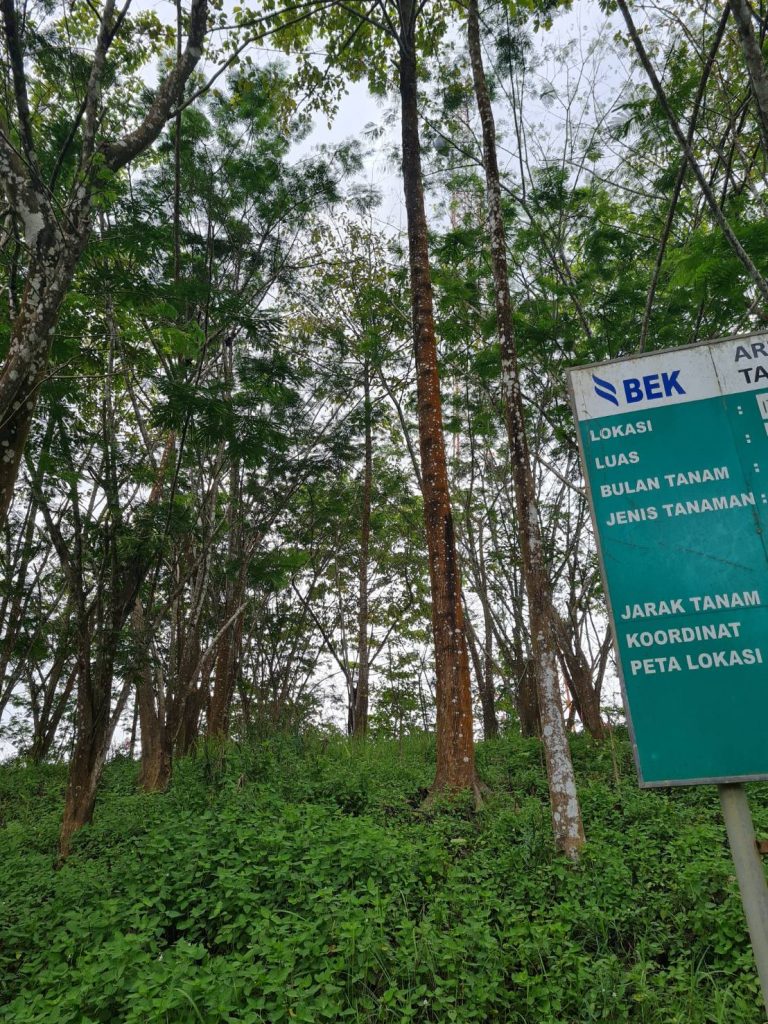
Aligned with the International Council on Mining and Metals (ICMM) principles, Banpu applies a progressive rehabilitation approach across our open-pit and underground mining operations to support sustainable post-mining land use and ecosystem restoration. For open-pit operations, rehabilitation is implemented progressively throughout the mine life in accordance with our mine closure plans. This includes void management, landform stabilization, water management, and revegetation using native species to restore ecosystem function and local economic value.
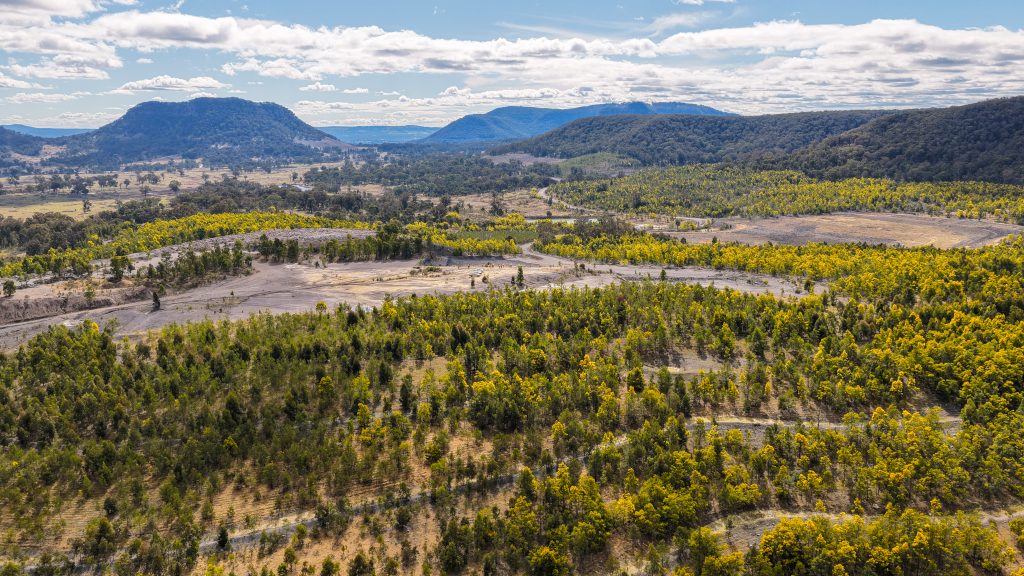
Across our underground operations, we implement regulator-approved rehabilitation management plans to achieve safe, stable, and non-polluting landforms. These plans integrate risk assessment, closure planning, and defined completion criteria. Revegetation programs prioritize geotechnical stability, protection of water quality, and establishment of low-maintenance, self-sustaining ecosystems. Rehabilitation effectiveness is reviewed through annual monitoring and audits, including biodiversity assessments. Completed programs are formally handed over to relevant government authorities, ensuring regulatory compliance, transparency, and strong environmental governance.
Mine Subsidence Management
Subsidence is a material risk in underground mining and is managed through a structured risk management framework that protects infrastructure, biodiversity (including threatened species and habitats), water resources, cultural heritage, and community safety. Subsidence impact assessments inform conservative panel and pillar designs, with defined subsidence limits. Site-specific subsidence management and extraction plans are approved by regulators and implemented in line with statutory requirements.
In 2025, enhanced monitoring, updated predictive modeling, and strengthened Trigger Action Response Plans (TARPs) ensured subsidence impacts across our underground mining operations remained within approved and predicted limits, with no material adverse impacts reported. We monitor, benchmark, and disclose performance through annual reporting and reviews. Springvale Mine illustrates this approach in practice, applying modeling techniques to longwall mining design to identify potential impacts and develop appropriate management measures for subsidence-related impacts.
To ensure effective subsidence management, we conduct regular risk assessments and update the subsidence management plan as part of routine operations. The regular monitoring had been conducted using a network of surface crack stations and bathymetric surveys that track both vertical and horizontal ground movement. These real-time data are compared against model predictions, allowing for continual refinement of subsidence models and further optimizing the subsidence management plan. Performance indicators are established to monitor infrastructure integrity, ecosystem health, and safety. Underground panel surveys and “as-built” verifications are also conducted to ensure mining activities align with approved mine designs, while geotechnical hazard mapping strengthens underground safety protocols.
The subsidence monitoring programs are formally reviewed at least every 3 years or sooner if triggered by stakeholder concerns, changes in management requirements, unexpected impacts, or the need for additional actions. An annual subsidence management report is prepared, incorporating monitoring data and environmental performance to ensure ongoing protection of dependent ecosystems.
In the event that monitoring reveals significant trigger conditions such as exceeding thresholds, we immediately activate the incident response measures. These include notifying and engaging stakeholders through the Community Consultative Committee (CCC), investigating to identify root cause, and implementing corrections to address non-compliance and corrective actions to prevent recurrence. Findings are documented in the annual subsidence management report. This structured and transparent approach not only safeguards the environment and surrounding communities but also reinforces Banpu’s commitment to responsible and sustainable mining practices.
Year in Review
In 2025, the Company implemented mine closure and rehabilitation activities across operational sites in accordance with approved plans and leading practice frameworks to deliver safe, stable, non-polluted, and sustainable post-mining land uses that support ecosystem recovery and local community livelihoods. Key activities included tailing dam management, void management, acid mine drainage (AMD) management, and biodiversity monitoring in reclamation areas. Performance monitoring confirms that environmental risks were effectively managed, rehabilitation objectives were met, and outcomes remained compliant with regulatory requirements.
We met all annual targets. All operating mines maintained 100% coverage under approved closure plans in line with regulatory requirements. Progressive rehabilitation continued to advance, with revegetation activities achieving 102% of the annual plan for open-pit mine. Underground mine closure activities were fully completed as scheduled, reaching 100% of planned actions. Community related programs exceeded expectations at 110% against the plan.
 English
  Thai
Thai