
Talent Development
Talent Development
Policy & Commitment
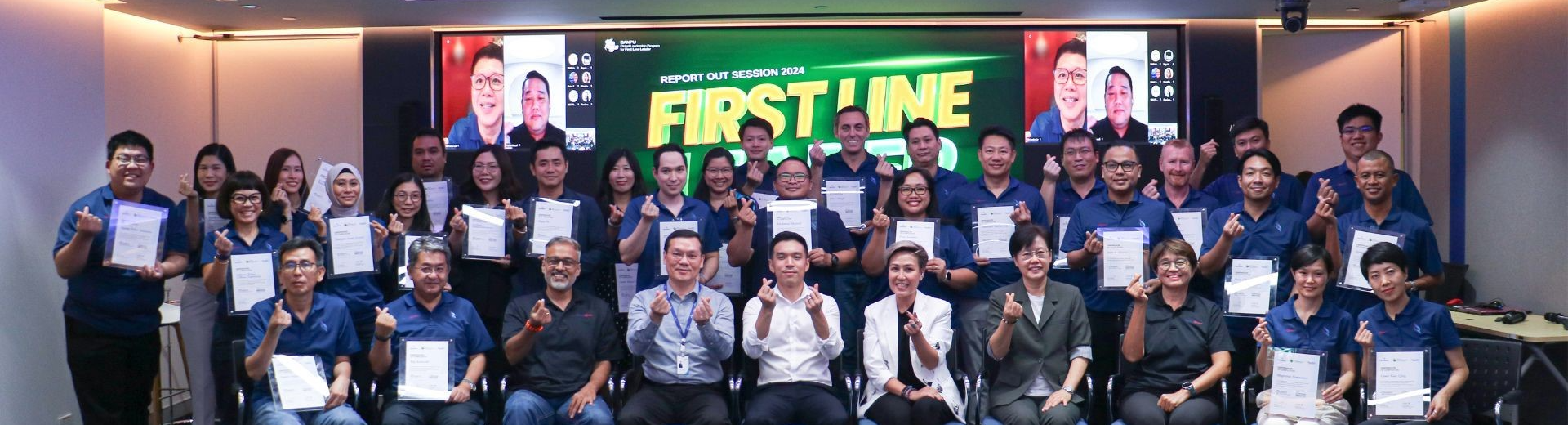
The Company is committed to building a future-ready workforce and a robust leadership pipeline that can successfully execute our strategic transformation and drive innovation throughout the business transition. This commitment is grounded in the belief that human capital is a key driver of competitiveness and long-term sustainability. Guided by the Training and Development Policy and long-term business strategy, Banpu prioritizes strategic workforce planning to ensure continuous development, succession readiness, and alignment with evolving business needs. The Company is dedicated to systematically identifying, developing, and promoting high-potential talent to fill critical leadership roles, while attracting and retaining high performers. By integrating digital and AI-driven tools into our development initiatives, Banpu equips our people with the capabilities required to lead in a digital-driven, rapidly evolving energy landscape.
Management Approach
The Company manages talent development through a capability-first, Outcome-Driven Development approach, treating it as a core strategic investment rather than a standalone training activity. Our talent development framework is skill-based, covering leadership and functional skills, differentiated by job level and role, and is supported by skill assessments and Individual Development Plans (IDPs) to identify gaps and personalize learning journeys. To strengthen the leadership pipeline, the Company integrates succession planning into this framework, ensuring that high-potential talent is systematically identified, developed, and prepared for critical roles..
To support business expansion and energy transition, Banpu focuses on 5 strategic capability clusters: Business & Leadership Excellence, Digital & Data & AI Enablement, Energy Transition & Low-Carbon Technologies, Sustainability & Green Finance, Innovation & Continuous Improvement. Across these clusters, the Company applies an Outcome-Driven Development approach through integrated learning journeys that combine formal learning, practical application, coaching, and knowledge sharing.
Development initiatives are designed by translating business priorities into required capabilities, critical roles, and targeted learning interventions. Program effectiveness is monitored through both leading and lagging indicators, including capability adoption, workplace application, productivity improvement, leadership effectiveness, and readiness for critical roles, ensuring that learning investments contribute directly to organizational performance.
Year in Review
In 2025, Banpu expanded multi-level leadership programs focused on coaching, collaboration, and practical leadership behaviors. We scaled AI and digital capability development to enhance productivity and agile ways of working, and embedded Outcome-Driven Development practices that emphasize real-world application, manager involvement, and measurable business impact.
During the year, Banpu established new talent development targets for 2026–2030. The targets span the full talent lifecycle, covering successor identification and readiness for critical positions, active development of successors, IDP coverage for both successors and high-potential employees, leadership program participation among high potentials, internal candidate fill rate for open management positions, and voluntary turnover of high-potential employees. Together, these targets reinforce Banpu’s commitment to a sustainable, future-ready leadership pipeline.
Internal mobility and talent retention remained important priorities, with 12% of open management positions filled by internal candidates in 2025, providing a foundation for further progress toward the 2030 target of more than 23%. Banpu also retained talent effectively, with voluntary turnover among high-potential employees at 1.2%, below the target threshold of 5%. Together with ongoing monitoring of average training hours per employee, these results reflect our commitment to continuous learning, leadership development, and workforce readiness.
 English
  Thai
Thai