
Business Ethics & Transparency
Business Ethics & Transparency

Policy & Commitment
Banpu is committed to upholding the highest standards of integrity, transparency, and ethical conduct across all business activities. This commitment is anchored in Corporate Governance Policy and Code of Conduct, Anti Corruption Policy, and Tax Management Approach, which together set clear standards for ethical decision-making across the organization. We maintain a zero tolerance stance toward all forms of corruption and bribery. As a responsible corporate citizen, we are committed to tax transparency and fair transfer pricing that delivers equitable benefits to the host countries where we operate. Regulatory compliance is embedded across operations to prevent sanctions and reputational risks. Through continuous awareness initiatives, we foster an ethical culture that strengthens stakeholder trust and safeguards long term business sustainability.
Management Approach
The Company implements a Corporate Governance Policy and Code of Conduct aligned with international standards, including the ASEAN Corporate Governance Scorecard, OECD Guidelines, and the corporate governance principles for Thai listed companies according to the Securities and Exchange Act, the Securities and Exchange Commission (SEC), and the Stock Exchange of Thailand (SET). These policies are regularly reviewed and updated to reflect evolving regulations, stakeholder expectations, and global best practices.
To reinforce this commitment, we have implemented the formal Anti-Corruption Policy, which explicitly prohibits any direct or indirect involvement in corruption by our directors, management, and employees. The Company conducts annual corruption risk assessment across all business units, including subsidiaries and joint ventures, with results reported to the Risk Management Committee. Ethical conduct is also embedded in employee compensation through the behavioral component of the annual performance review, and is reinforced by structured communication throughout our business operations.
Tax affairs are managed proactively in strict compliance with applicable laws, with tax strategy aligned with commercial and economic activities. All intra-group transactions comply with transfer pricing regulations and OECD/G20 Base Erosion and Profit Shifting (BEPS) reporting standards. The group investment structure is designed for flexibility and risk reduction, without contrived tax structures intended for avoidance. To ensure regulatory compliance across a multi-jurisdictional environment, the Company has implemented a regulatory compliance risk management system aligned with ISO 37301:2021. The system operates under the Audit Committee’s supervision and follows the three lines model.
Business Ethics Linked to Employee Remuneration
The Company reinforces adherence to the Corporate Governance Policy and Code of Conduct by integrating ethical behavior into the annual salary adjustment framework. Employee evaluations consider both performance outcomes and behavioral alignment with corporate values, promoting a consistent ethics driven culture across the organization.
For all employees, the annual assessment is weighted 80% on KPI achievement and 20% on behavioral alignment with the corporate culture Banpu Heart, particularly the “Committed” dimension, that reinforces the expectation to “do the right things, always.” This approach promotes integrity, accountability, and professionalism. Assessment outcomes inform both annual compensation decisions and individual development planning. This process supports continuous capability enhancement and helps cultivate a values driven, ethical culture throughout the organization.
Corruption Risk Assessment and Mitigation Measures
Each year, the Company conducts a comprehensive corruption risk assessment across all business units, including subsidiaries and joint ventures. The assessment results are submitted to the Risk Management Committee for oversight and continuous improvement. These assessments identify potential vulnerabilities and guide the implementation of preventive measures tailored to business-specific contexts. The 2025 assessment identified 2 key corruption risks, including reputational risk from gifts to key stakeholders and reputational risk from benefits to government officials.
Reputational risk from gifts to key stakeholders
Reputational risk from benefits to government officials
Description
Accepting and offering gifts at occasions (i.e., New Year, organizational reshuffles, or retirements) may lead to perceptions of undue influence or favoritism.
Provision of improper benefits during permit and license application processes can result in operational delays or legal repercussions.
Impact
Bias in business decisions or jeopardize business opportunities
Operational delays or suspension of business activities
Mitigation action
• Announced and communicated stakeholder relations management policy
• Reinforced anti-corruption policy
• Deployed corporate standard for accepting and offering of gifts, hospitality, or other similar forms of reward
• Maintained adherence to the No Gift Policy
• Reinforced anti-bribery and corruption policy and the Code of Conduct,
• Established standard procedures for permit and license management, and obligation fulfillment and monitoring
• Conducted rigorous document verification to ensure compliance and prevent unnecessary delays
Risk Culture
Banpu is committed to cultivating a strong risk management culture across the organization by embedding risk awareness into employees’ mindsets and daily operations. Driven top down by the Board and senior management, this culture is reinforced through the effective use of risk management tools, including risk appetite and Key Risk Indicators (KRIs) to monitor risk trends, assess performance, and support informed decision making. Risk considerations are also integrated into human resource processes to encourage proactive risk management aligned with individual roles and responsibilities.
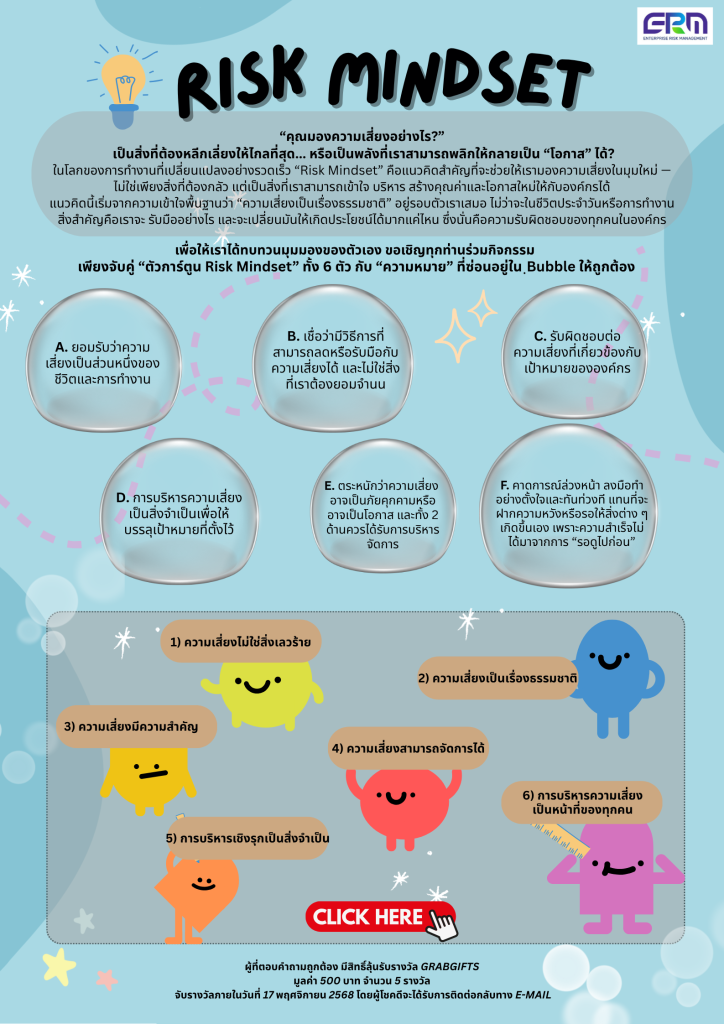
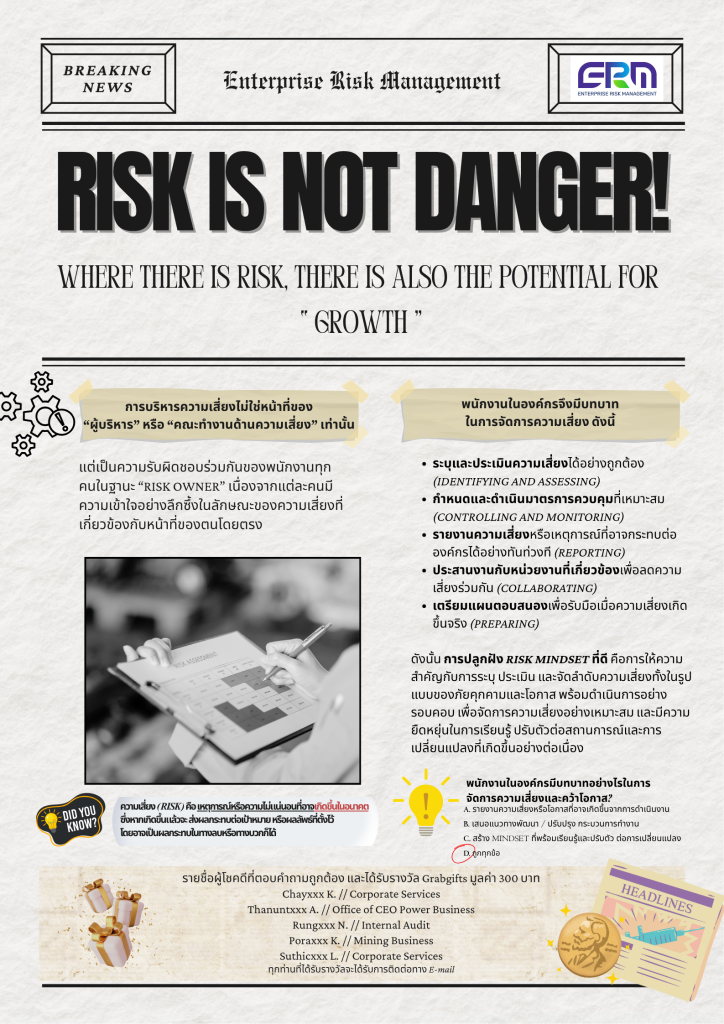
The Company emphasizes knowledge development and employee engagement through training programs, risk workshops, and internal communications. These initiatives strengthen the capability to identify, assess, manage, and report risks effectively, enabling the integration of risk factors into operational decision making and strategic planning at all levels.
Tax Transparency and Management
Being a responsible corporate citizen in every country where we operate is the Company’s top priority. The Company is committed to full compliance with all applicable tax laws and regulations, ensuring that taxes are paid accurately and on time in the jurisdictions where value is created. Tax payments and related information are publicly disclosed to stakeholders in accordance with international best practices and local regulatory requirements.
The Company’s tax affairs are governed by the Tax Management Approach, approved by the CEO, which sets out clear principles on tax strategy, risk management, transfer pricing, and group investment structure. Tax planning activities are aligned with commercial and economic substance. The Company does not engage in aggressive tax planning, use contrived structures lacking commercial substance, or employ arrangements designed to transfer value created to low-tax jurisdictions.
For intra-group transactions, the Company adheres to the arm’s-length principle in compliance with transfer pricing regulations and the OECD/G20 Base Erosion and Profit Shifting (BEPS) framework. Transfer pricing documents are prepared in accordance with applicable standards, independently verified by third parties, and made available to relevant stakeholders to ensure that profits are allocated fairly and equitably to the host countries where economic activities take place.
The Company maintains open, constructive, and transparent relationships with tax authorities across all operating jurisdictions. Where legislation is unclear, external professional advice or confirmation from tax authorities is sought to ensure compliance and mitigate tax risks.
Year in Review
In 2025, the Company advanced ethical awareness through the “Pulse of Ethics” initiative, providing training and communication that reinforced the application of the Corporate Governance Policy and Code of Conduct across all business units. In Thailand, we expanded access to governance resources through the CG Library on our internal portal. In Indonesia, the tenth anniversary of CG Day reaffirmed our commitment to embedding good corporate governance as a foundation for sustainable performance.
External assessments validated our approach. The Company achieved an “Excellence” rating in the Corporate Governance Report of Thai Listed Companies, received the ASEAN Asset Class PLCs recognition, and maintained the certified member status in the Thai Private Sector Collective Action Against Corruption (CAC) program.
In 2025, the Company received 3 CG-related complaints from stakeholders in Thailand. Two were found to be unsubstantiated. The third case confirmed a Code of Conduct violation involving a conflict of interest, and disciplinary action was taken. We also concluded 1 significant non-compliance case involving a 2022 emissions event reported beyond the required 24-hour regulatory window. The enforcement process closed in 2025 with a fine of USD 11,438, and no environmental harm occurred. In response, we have strengthened our incident escalation and regulatory reporting controls to prevent recurrence.
Building upon these foundations, the Company has set new targets for 2026–2030, anchored in a zero‑tolerance commitment. The targets combine leading indicators: coverage of corruption risk assessment and a formal grievance mechanism, with lagging indicators: significant CG‑related complaints and employee perception on ethical culture.
 English
  Thai
Thai