
Decarbonization & Climate Resilience Projects
Energy Reduction from Coal Handling in Indonesia
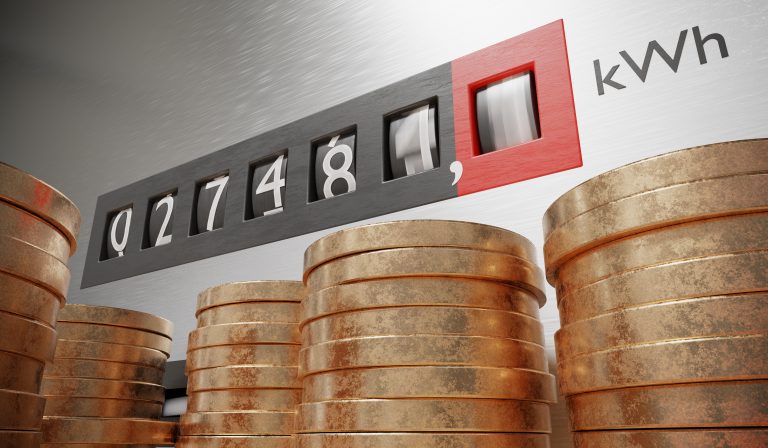
In accommodating customer demand and blending various coal types, the utilization of Low CV coal sourced from third parties has been favored. However, this type of coal tends to cause blockages within chutes during the rainy season, disrupting the seamless transfer of coal between conveyors. Such blockages not only prolong cleanup efforts but also interrupt loading processes. Traditionally, chute blockages were managed using labor-intensive techniques like high-pressure water spraying or manual removal, which were constrained by limited staff availability.<br><br>In response to the operational inefficiencies and environmental concerns linked to excessive water usage, Bontang Coal Terminal (BoCT) in Indonesia introduced an innovative solution in March 2022: “the installation of air cannons in transfer chutes”. These cannons autonomously release periodic air blasts to clear material buildup. Since implementing this system, remarkable improvements have been observed:<br>• 80% reduction in delays and cleanup times due to chute blockages<br>• 5% increase in gross loading rate<br>• Annual reduction in energy consumption by approximately 538 MWh, leading to a decrease in GHG emissions of around 125 tCO2e per year.<br><br>These outcomes underscore the effectiveness of the air cannon system in enhancing operational efficiency while mitigating environmental impacts.
View More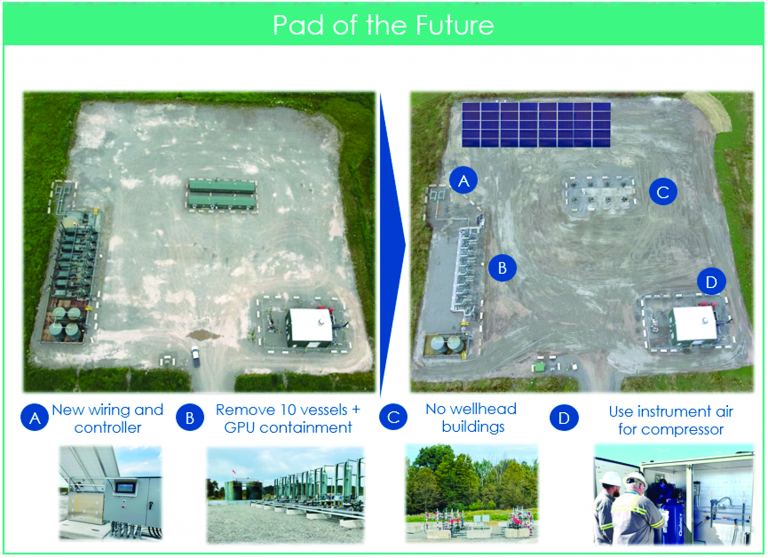
Pad of the Future
BKV, a subsidiary in the US, has taken a groundbreaking step towards decarbonization with the Pad of the Future program. This flagship initiative aims to reduce emissions within NEPA and Barnett operations by integrating operational improvements and modern technology. Launched in 2021, the program is a testament to BKV’s commitment to enhancing efficiency and minimizing carbon footprint through 4 strategic pillars:<br>• Pneumatic conversion: Convert natural gas-powered pneumatic controllers to compressed air on existing electrified pads.<br><br>• Electrification: Where feasible, electrifying pads to supplant use of natural gas in processing units and adding solar power to support pneumatic conversions from natural gas to air.<br><br>• Asset consolidation: Streamline and modernize existing pad facilities to reduce emissions caused by aging assets.<br><br>• Liquid consolidation and vapor capture: Minimize onsite storage of condensate and oil by transporting liquids rich in natural gas to centralized facilities.<br><br>With an estimated investment of 35 to 40 million USD, the program is set to impact over 6,000 of BKV’s existing wells (more than 8,000 pneumatic devices and 2,000 pneumatic pumps) by the end of 2025. To date, these efforts have led to an aggregate reduction of 515,000 tCO2e in 2023 and anticipated reduction of approximately 770,000 tCO2e by the end of 2025.
View More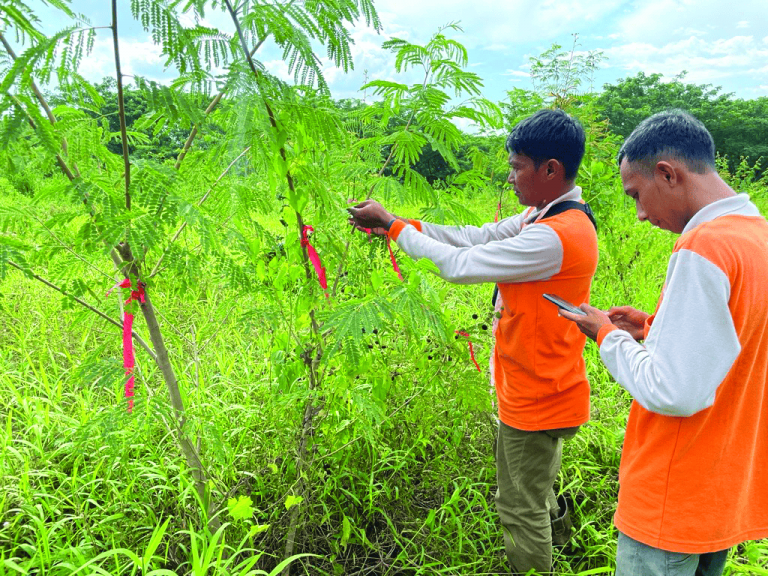
GREENCODE Digital Platform
ITM, a subsidiary in Indonesia, faced with the challenge of carbon stock data gathering from the reclamation process due to manual data collection and no standard reference. This inefficiency delayed data collection and validation.<br><br>To pursue this challenge, ITM initiated the GREENCODE project, which is a digital platform and dashboard designed to ensure the validity and visibility of carbon stock data. The project was rolled out at Embalut and Jorong mine.<br><br>The introduction of GREENCODE has significantly improved the efficiency and effectiveness of reclamation monitoring. It has also enhanced decarbonization knowledge of team members. Economically, the project has delivered tangible benefits by reducing lead time to update carbon stock data of USD 36,746 annually. The Company also potentially minimizes future carbon tax and ensures reclamation compliance.
View More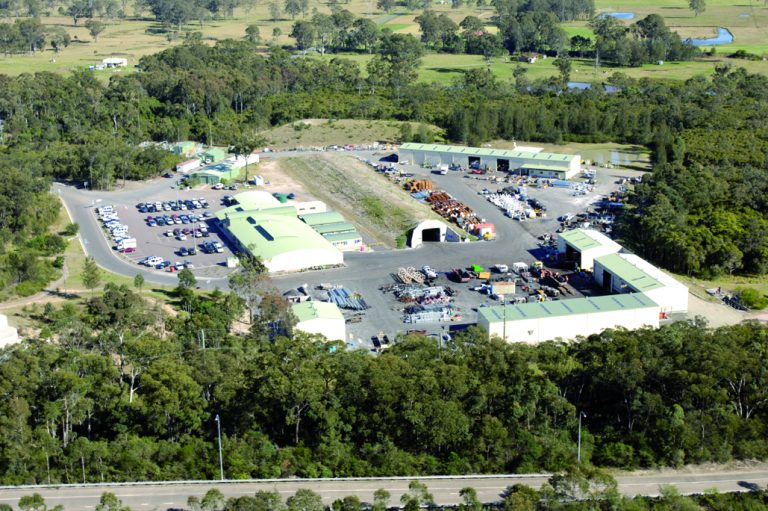
Reducing Emissions through Gas-to-Energy Initiative
Mandalong, an underground coal mine in Australia, is characterized by its complex and large-scale emissions profile. These emissions mainly come from three ventilation fans that expel air from the mine. This air carries gases released from the coal extraction process and older, sealed areas. To manage inseam gas content, the site uses a gas drainage system, which plays a crucial role in maintaining mine safety and production efficiency.
View More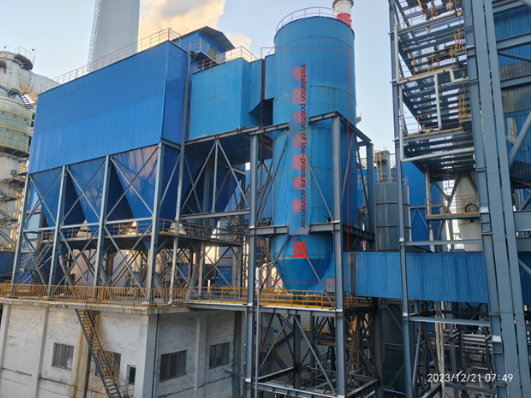
Flue Gas Heat Recovery Project at Zouping
With carbon emissions allowances for coal-fired power plants becoming increasingly stringent, reducing coal consumption while maintaining stable operational performance has become a crucial priority.
View More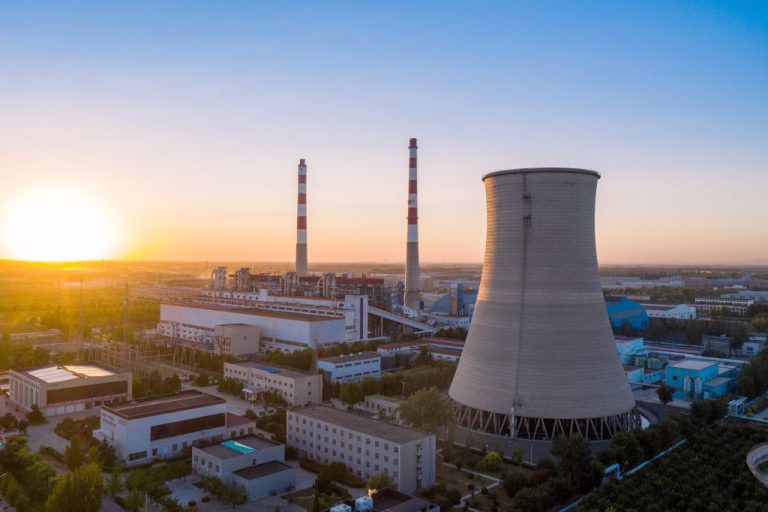
Opportunity under Emission Trading Scheme (ETS) in China
Launched in 2021, China's Emission Trading Scheme (ETS) marks a pivotal move in cutting the nation's carbon emissions. The scheme distributes emission allowances based on the power plants' generation output, with benchmark criteria that vary by fuel type and technology. It also enables companies to trade these allowances, granting them the right to emit a specific amount of carbon dioxide.
View More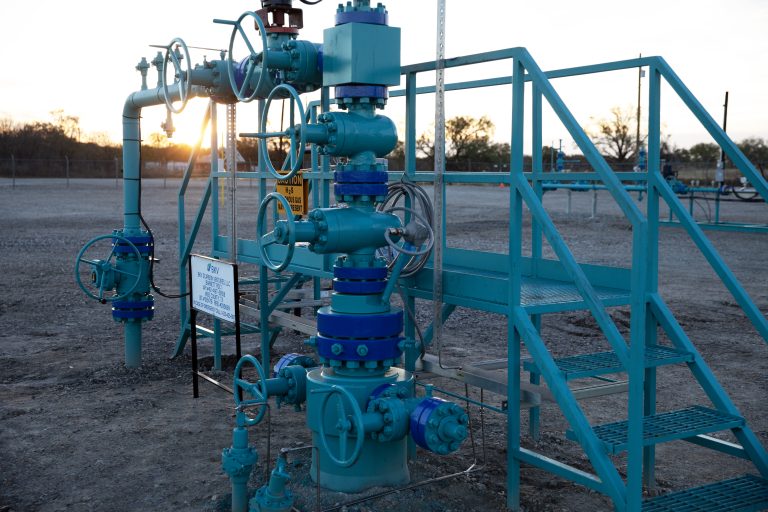
Barnett Zero, The First Carbon Capture and Sequestration (CCS) project of Banpu
The Barnett Zero Project is a Carbon Capture and Sequestration (CCS) initiative led by BKV, a subsidiary in the U.S., and EnLink Midstream. It is one of the first commercial CCS projects in the U.S., aiming to reduce CO2 emissions from natural gas production in the Barnett Shale region of Texas.
View More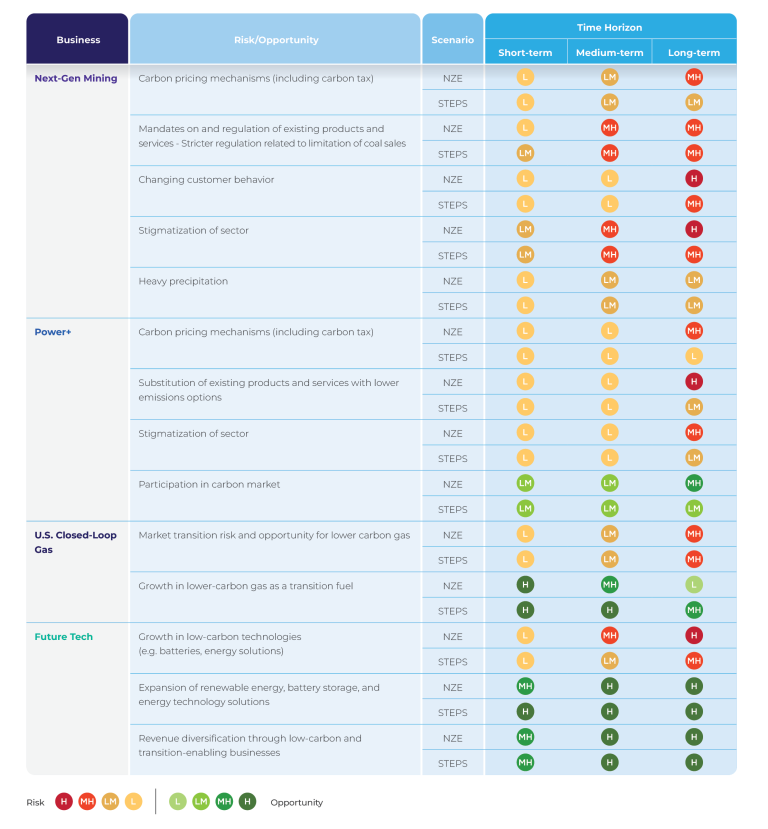
Climate Scenario Analysis
Based on transitional and physical climate scenario analysis, Banpu recognizes that our portfolio is exposed to both long-term transition pressures and increasing physical climate risks. In alignment with these recommendations, Banpu has conducted a comprehensive assessment of climate-related risks and opportunities using 4 climate scenarios:<br>• IEA Stated Policies Scenario (STEPS)<br>• IEA Net Zero Emissions (NZE) by 2050 Scenario<br>• Representative Concentration Pathway (RCP) 8.5 – High-emissions scenario<br>• Representative Concentration Pathway (RCP) 2.6 – Low-emissions scenario
View More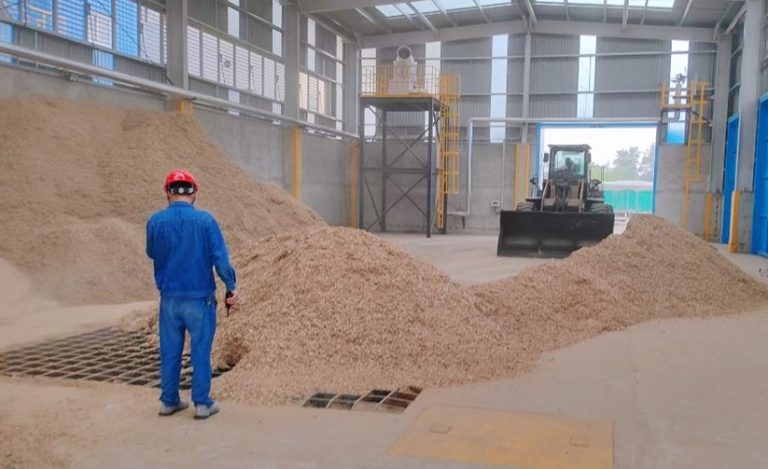
Biomass Co-firing in CHP Plant
To support China’s transition toward a green and low-carbon energy system, Zhengding became the Company’s first power plant to pilot biomass co-firing with coal. This initiative aims to lower GHG emissions intensity while generating additional revenue through the sale of GHG emission allowances. The trial demonstrated that biomass and coal can be co-fired in a stable and efficient manner without adverse impacts on plant operations.<br><br>Building on these results, Zhengding plans to gradually increase the biomass blending ratio from 2025 onward, with a target of achieving a 10% biomass mix by 2026. The project requires a one-time capital investment of USD 552,000 and annual operating expenses of USD 60,000. Once fully implemented, the initiative is expected to generate approximately USD 953,000 per year from the sale of GHG emission allowances. Beyond emissions reduction and revenue enhancement, biomass co-firing contributes to improved agricultural waste management, more efficient resource utilization, increased income for local farmers, and the development of related value chains, while supporting job creation and local economic growth.
View More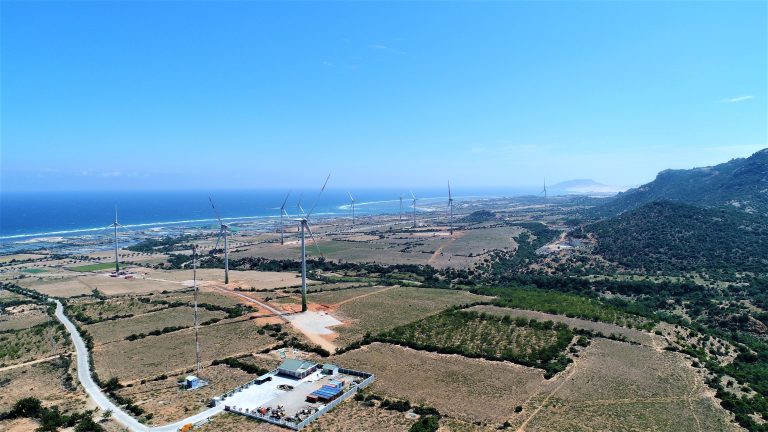
GHG Emissions Reduction Initiatives
To support our Net Zero journey, Banpu has implemented several GHG emissions reduction initiatives across our business operations. For each initiative, emissions reductions are quantified by comparing actual performance against a baseline scenario reflecting conditions prior to implementation.
View More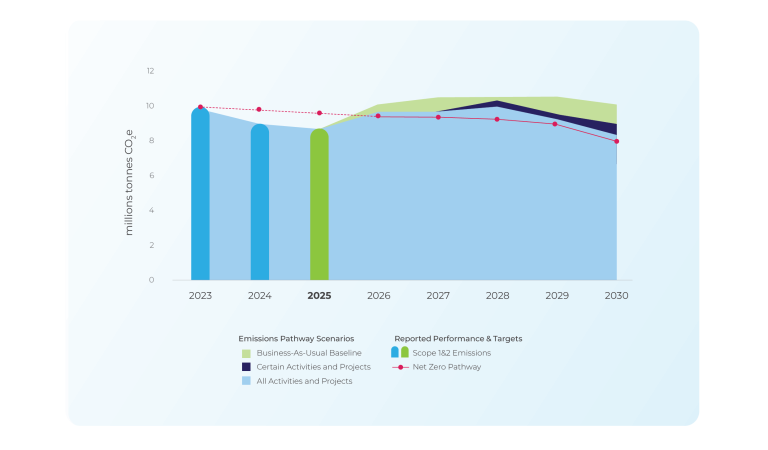
Climate-Related Targets and Net Zero Ambition
Banpu has committed to achieving Net Zero greenhouse gas (GHG) emissions for Scope 1 and Scope 2 by 2050, with an interim target to reduce absolute Scope 1 and 2 emissions at least 20% by 2030 from a 2023 baseline. The pathway and interim targets were stress‑tested against 1.5 °C‑aligned scenarios, including the IEA NZE scenario, to assess consistency with required decarbonization rates and to identify execution and dependency risks. Alongside these emissions targets, Banpu has set a portfolio transition target for more than 50% of our EBITDA to come from non-coal businesses by 2030. Target and disclosures are developed in alignment with IFRS S2 disclosure principles. In addition, Banpu is expanding our Scope 3 inventory to cover all material categories. This will establish a robust baseline to assess the feasibility of setting a Scope 3 reduction target in future reporting cycles.<br><br>To ensure the credibility and integrity of our decarbonization pathway, Banpu engaged an independent third party to assess the technical feasibility and practicality of the planned initiatives under both certain activities and projects, and all activities and projects scenarios. The independent review concluded that the pathway is technically feasible, subject to the timely execution of the identified initiatives and the establishment of supporting enabling conditions. Banpu treats this independent assessment as a baseline rather than a one-time exercise. Targets and the underlying pathway will be reviewed periodically against evolving climate science, regulatory expectations, and operational performance.<br><br>Beyond 2030, Banpu aims to achieve Net Zero emissions by 2050 by prioritizing absolute emission reductions over offsetting. The investment decisions are screened using an internal carbon price to reflect the long-term cost of emissions in capital allocation. Residual emissions that cannot be abated within the target horizon will be addressed through a hierarchy of approaches, prioritizing engineered and nature-based removals that meet recognized quality criteria, with verified offsets used only where removals are not yet available at scale. Offset and removal credits will be sourced from projects certified under leading standards and assessed against recognized integrity frameworks.
View More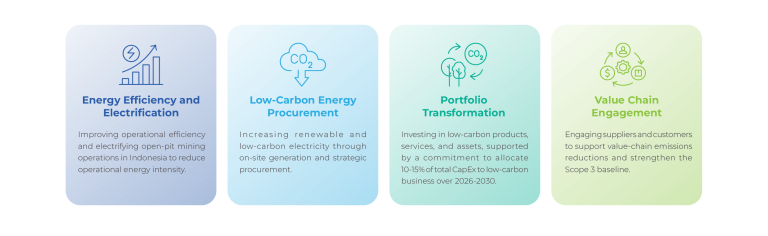
Climate Transition Plan
Banpu’s climate transition plan outlines how the Company will achieve Net Zero Scope 1 and 2 emissions by 2050, with an interim target to reduce absolute Scope 1 and 2 emissions at least 20% by 2030 from a 2023 baseline. The plan sets out governance, implementation levers, capital allocation, scenario testing, and monitoring arrangements, and is reviewed and updated annually.<br><br>Climate strategy oversight is provided by the Board-level ESG Committee, which quarterly reviews strategy, targets, and progress. The CEO is accountable for execution, supported by the Climate Change Committee, which coordinates deliverables across business units, monitors implementation, escalates material issues to the Board, and ensures alignment with IFRS S2 disclosure expectations. Progress toward the 2030 target is driven by four primary levers.<br><br><strong>• Energy Efficiency and Electrification:</strong> Improving operational efficiency and electrifying open-pit mining operations in Indonesia to reduce operational energy intensity.<br><strong>• Low-Carbon Energy Procurement:</strong> Increasing renewable and low-carbon electricity through on-site generation and strategic procurement.<br><strong>• Portfolio Transformation:</strong> Investing in low-carbon products, services, and assets, supported by a commitment to allocate 10-15% of total CapEx to low-carbon business over 2026-2030.<br><strong>• Value Chain Engagement:</strong> Engaging suppliers and customers to support value-chain emissions reductions and strengthen the Scope 3 baseline.
View More English
  Thai
Thai